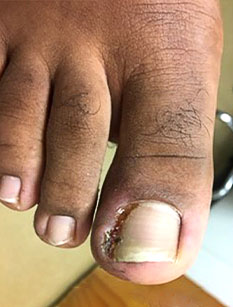
What Is an Ingrown Toenail?
Ingrown toenails can form when the side of a toenail begins to grow into the flesh surrounding the nail. As a result, the affected toe—most commonly the big toe—may become red, swollen, painful, and—in severe cases—infected.
What Causes Ingrown Toenails?
There are many reasons why an ingrown toenail may develop. Improperly cutting your toenails is a major cause of ingrown toenails. If toenails aren’t cut straight across or are cut too short, the likelihood of getting an ingrown toenail may increase. Other causes include having unusually curved toenails, wearing shoes that don’t give your toes an ample amount of space, and hereditary factors. Injuring the toe by stubbing it or having an object fall on it may also lead to ingrown toenails. If left untreated, an ingrown toenail can lead to further complications with the foot.
Ingrown Toenails and Diabetes
If you are someone who has diabetes, it’s extremely important to remain mindful of ingrown toenail prevention, as minor cuts or simple scrapes can lead to serious complications. You can prevent ingrown toenails by ensuring toenails are straight across and at a moderate length, wearing shoes that fit properly, and checking feet daily for signs of foot issues.
Treatment Options
Treatment for an ingrown toenail will vary on a case by case basis and may include:
- Lifting the ingrown nail and placing a splint or piece of cotton underneath
- Partially removing the nail, for a more severe case
- Removing the nail itself and the affected tissue, for cases that need extreme care
If you’d like more information about ingrown toenails, we recommend you consult with a podiatrist who can give you a proper diagnosis and go over your treatment options.
